
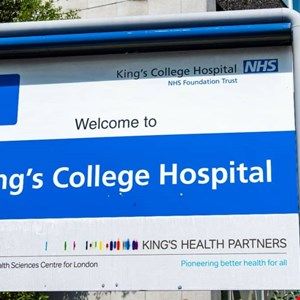
A patient's death has been officially linked to the June 2024 ransomware attack on Synnovis, marking the first confirmed fatality from a UK healthcare cyber incident. King's College Hospital confirmed the patient 'died unexpectedly' during the cyber-incident that crippled London's pathology services for weeks. Nearly 600 patient safety incidents were ultimately linked to the attack, with revised 2025 figures including two severe harm cases.
Ransomware attacks on healthcare providers involve malicious actors encrypting critical systems and demanding payment for decryption keys, often paralyzing patient care operations for extended periods. According to reporting from Infosecurity Magazine, the Synnovis incident demonstrates how cybersecurity failures can directly threaten patient lives through operational disruption.
Key Facts:
- First confirmed patient death linked to UK healthcare ransomware attack
- Nearly 600 patient safety incidents connected to the Synnovis breach
- Two cases resulted in severe harm to patients
- Attack disrupted pathology services across multiple London hospitals
What Makes Healthcare Systems Particularly Vulnerable?

The healthcare sector faces unique cybersecurity challenges that amplify attack impact. Legacy medical devices often run outdated operating systems that cannot be easily patched, whilst interconnected networks create multiple attack vectors. The NCSC's 2024 healthcare cybersecurity guidance emphasises that patient safety and cybersecurity are now inseparable concerns requiring board-level integration.
The Synnovis attack exploited these vulnerabilities through the healthcare supply chain, affecting not just the primary target but cascading across Guy's and St Thomas' NHS Foundation Trust, King's College Hospital NHS Foundation Trust, and primary care services. This interconnectedness, whilst clinically beneficial, creates systemic risk that boards must now factor into operational resilience planning.
How Should Boards Respond to Life-Safety Cyber Risks?
The confirmed fatality elevates healthcare cybersecurity from IT risk to patient safety governance. The Care Quality Commission now explicitly considers cyber resilience when assessing provider safety ratings, whilst NHS England requires all trusts to achieve Cyber Essentials Plus certification by 2025.
Boards overseeing healthcare operations or critical infrastructure must recognise that cyber incidents can directly cause harm to vulnerable populations. This shifts risk appetite discussions from financial impact to duty of care obligations, requiring investment in redundant systems, offline backup procedures, and incident response capabilities that prioritise life-safety operations.
Boardroom Questions
- Can our organisation maintain critical life-safety functions during a complete system compromise lasting several weeks?
- What specific patient safety or operational continuity risks would emerge if our primary digital systems were encrypted by ransomware?
- How do our third-party suppliers and partners demonstrate their cyber resilience capabilities affect our duty of care obligations?
Quick Diagnostic

- Do you maintain offline backup systems for critical life-safety operations that can function independently of primary IT infrastructure?
- Can you identify and prioritise which digital systems, if compromised, would create immediate safety risks to vulnerable populations you serve?
- Have you conducted tabletop exercises simulating extended system outages specifically focused on maintaining duty of care obligations rather than just business continuity?
Related Reading
Your Backup Strategy Is About to Fail When It Matters Most — Latest Sophos data shows enterprise backup usage has dropped to a four-year low of 53%, whilst modern ransomware specifi
Russian State Hackers Target UK Business Leaders Through WhatsApp in NCSC Alert — NCSC warns Russian threat actors are using sophisticated social engineering attacks on WhatsApp, Signal, and Messenger t
UK Enterprise Wireless Networks Hit by £1M+ Annual Losses as AI-Powered Attacks Surge — New Cisco research reveals 58% of UK organisations suffered financial losses from wireless security incidents, with AI-p
LinkedIn's Browser Spy Operation Exposes Secret Data on UK Business Users — BrowserGate investigation reveals LinkedIn secretly scans 6,000+ browser extensions without consent, collecting sensitiv
Russia Targets UK Business Leaders Through WhatsApp in NCSC Alert — NCSC warns Russian state actors are actively targeting UK business leaders through sophisticated WhatsApp and Signal acc
Strengthen your organisation's security posture